
Understanding ACFT Calculations: A Comprehensive Guide

 Errol
Errol
2026-06-17 06:16
78
0
본문
Each event in the ACFT is scored on a scale of 0 to 100 points, with the maximum score of 600 points achievable across all six events. The scoring is gender- and age-specific, ensuring fairness and relevance to all soldiers.
One of the challenges associated with the ACFT is the preparation required to meet the passing scores. Some soldiers have reported difficulty in adjusting to the new requirements, particularly with events like the leg tuck, which replaced the sit-up from the APFT. The leg tuck demands not only core strength but also upper body strength, presenting a challenge for those who may have relied on traditional sit-ups for their fitness regimen. Many units have implemented training programs designed to enhance performance across all six events, but the transition has not been seamless. Soldiers must adapt their training regimens to focus on the specific events included in the test.
Soldiers must lift a weight ranging from 140 to 340 pounds, depending on their body weight and gender. Deadlift: This event involves lifting a weighted barbell from the ground to a standing position, assessing lower body strength.
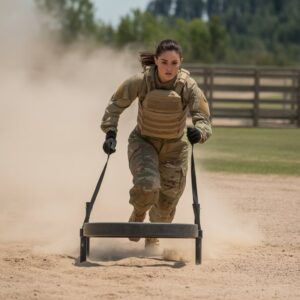 Proponents argue that the test is a more accurate reflection of the physical demands placed on soldiers in combat situations. Critics, however, have raised concerns about the test's rigor and the potential for increased failure rates among soldiers who may have performed adequately under the APFT. The events are tailored to simulate real-world tasks, such as lifting heavy equipment, sprinting under load, and maintaining endurance over time. The introduction of the ACFT has been met with mixed reactions.
The risk of failing the test can lead to increased stress and anxiety among soldiers, particularly those who may have previously excelled under the APFT. This pressure can create a challenging environment, especially for those who may struggle with specific events. The Army has instituted a policy that allows soldiers to retake the ACFT if they do not pass, but repeated failures can result in administrative actions, including potential separation from service. Additionally, the ACFT has implications for soldier retention and morale.
Moreover, the ACFT emphasizes functional fitness, focusing on movements and exercises that soldiers are likely to encounter in real-world scenarios. This shift in focus helps prepare soldiers for the physical demands of combat, ultimately enhancing their effectiveness on the battlefield.
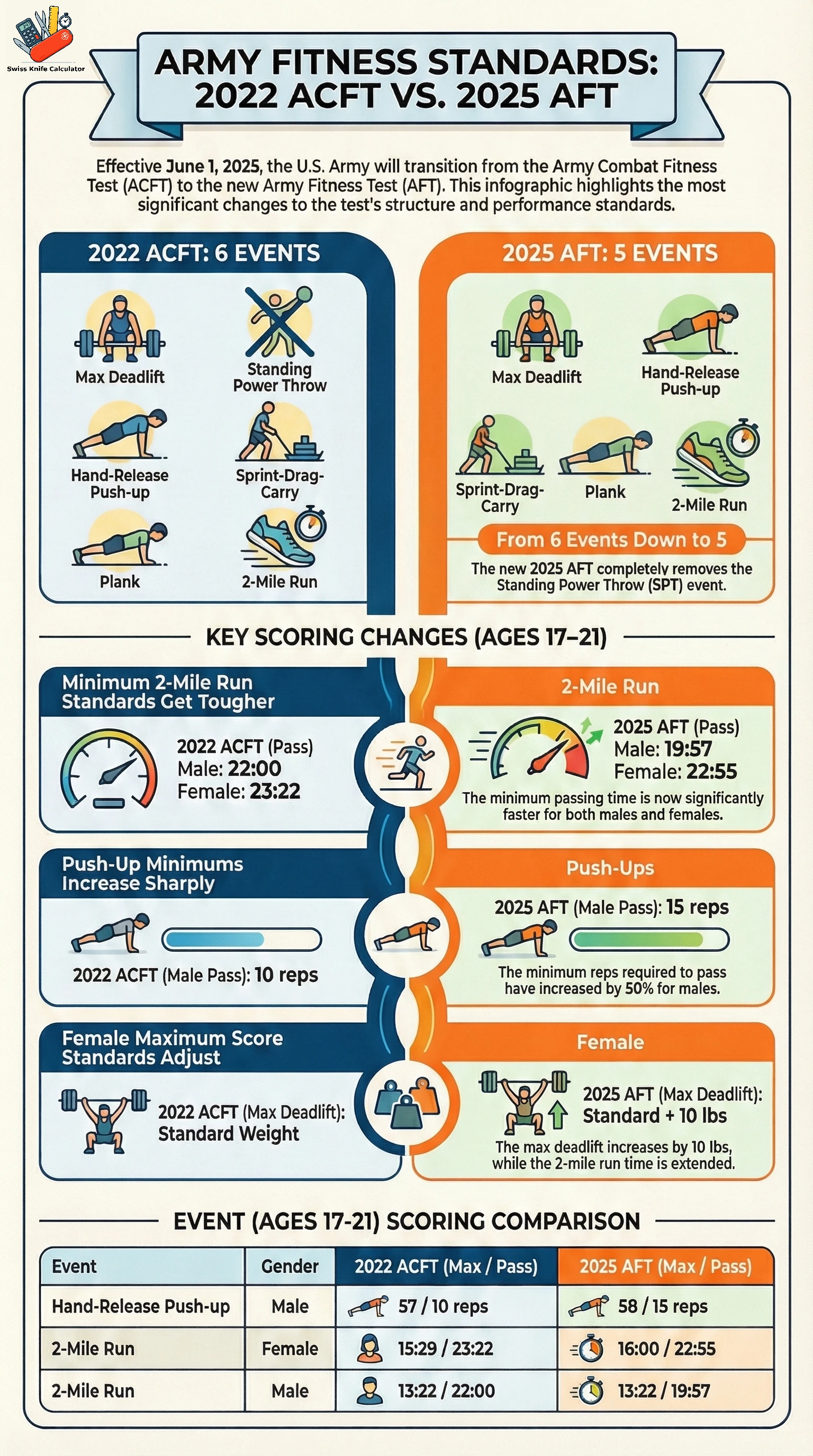
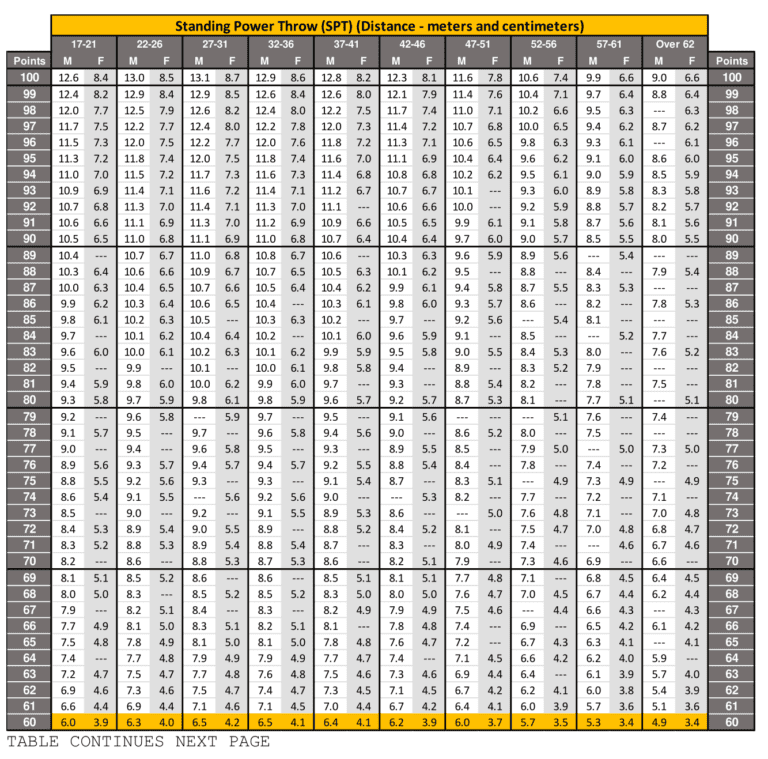 Each event is scored, and the overall performance is critical for soldiers' evaluations, promotions, and assignments. The test consists of six events: the deadlift, standing power throw, hand-release push-ups, sprint-drag-carry, leg tuck, and a two-mile run. The ACFT was officially implemented to replace the army acft score chart 2026 Physical Fitness Test (APFT) and to better assess the physical capabilities required for combat readiness.
Rigorous testing was conducted to ensure accuracy in scoring and to identify any bugs or issues. Development and Testing: The development team utilized programming languages such as JavaScript and Python to build the calculator. Feedback from test users was incorporated to refine the tool furthe
 Feedback from users has been overwhelmingly positive, with many highlighting the following benefit Since its launch, the ACFT Score Chart Calculator has had a significant impact on the training and assessment of soldiers.
 Wireframes were developed to visualize the layout and functionality of the calculator. Key features included input fields for each event, automatic score calculations, and a summary of total scores and performance categorie Design and Prototyping: The design phase focused on creating a simple yet effective user interface.
This scoring system has sparked discussions about fairness and equality, with some arguing that it may inadvertently lower the standards for female soldiers. A significant aspect of the ACFT is its emphasis on gender and age-adjusted scoring. For example, the passing score for a male soldier aged 17-21 is 360 points, while a female soldier in the same age group has a slightly lower threshold, reflecting the differences in average physical capabilities. This approach aims to level the playing field, recognizing physiological differences while still maintaining high standards for all soldiers.
Embracing this new fitness paradigm is essential for soldiers aiming to excel in their military careers and meet the demands of modern combat. As soldiers engage with the ACFT and utilize the score calculator, they not only enhance their personal fitness levels but also contribute to the overall readiness and effectiveness of the Army. By providing a comprehensive evaluation of soldiers' physical capabilities, it fosters a culture of fitness and readiness while ensuring fair and equitable assessment standards. In conclusion, the ACFT score calculator is a pivotal tool in the Army's approach to physical fitness assessment.
One of the challenges associated with the ACFT is the preparation required to meet the passing scores. Some soldiers have reported difficulty in adjusting to the new requirements, particularly with events like the leg tuck, which replaced the sit-up from the APFT. The leg tuck demands not only core strength but also upper body strength, presenting a challenge for those who may have relied on traditional sit-ups for their fitness regimen. Many units have implemented training programs designed to enhance performance across all six events, but the transition has not been seamless. Soldiers must adapt their training regimens to focus on the specific events included in the test.
Soldiers must lift a weight ranging from 140 to 340 pounds, depending on their body weight and gender. Deadlift: This event involves lifting a weighted barbell from the ground to a standing position, assessing lower body strength.
Proponents argue that the test is a more accurate reflection of the physical demands placed on soldiers in combat situations. Critics, however, have raised concerns about the test's rigor and the potential for increased failure rates among soldiers who may have performed adequately under the APFT. The events are tailored to simulate real-world tasks, such as lifting heavy equipment, sprinting under load, and maintaining endurance over time. The introduction of the ACFT has been met with mixed reactions.The risk of failing the test can lead to increased stress and anxiety among soldiers, particularly those who may have previously excelled under the APFT. This pressure can create a challenging environment, especially for those who may struggle with specific events. The Army has instituted a policy that allows soldiers to retake the ACFT if they do not pass, but repeated failures can result in administrative actions, including potential separation from service. Additionally, the ACFT has implications for soldier retention and morale.
Moreover, the ACFT emphasizes functional fitness, focusing on movements and exercises that soldiers are likely to encounter in real-world scenarios. This shift in focus helps prepare soldiers for the physical demands of combat, ultimately enhancing their effectiveness on the battlefield.
Each event is scored, and the overall performance is critical for soldiers' evaluations, promotions, and assignments. The test consists of six events: the deadlift, standing power throw, hand-release push-ups, sprint-drag-carry, leg tuck, and a two-mile run. The ACFT was officially implemented to replace the army acft score chart 2026 Physical Fitness Test (APFT) and to better assess the physical capabilities required for combat readiness.Rigorous testing was conducted to ensure accuracy in scoring and to identify any bugs or issues. Development and Testing: The development team utilized programming languages such as JavaScript and Python to build the calculator. Feedback from test users was incorporated to refine the tool furthe
Feedback from users has been overwhelmingly positive, with many highlighting the following benefit Since its launch, the ACFT Score Chart Calculator has had a significant impact on the training and assessment of soldiers.Wireframes were developed to visualize the layout and functionality of the calculator. Key features included input fields for each event, automatic score calculations, and a summary of total scores and performance categorie Design and Prototyping: The design phase focused on creating a simple yet effective user interface.This scoring system has sparked discussions about fairness and equality, with some arguing that it may inadvertently lower the standards for female soldiers. A significant aspect of the ACFT is its emphasis on gender and age-adjusted scoring. For example, the passing score for a male soldier aged 17-21 is 360 points, while a female soldier in the same age group has a slightly lower threshold, reflecting the differences in average physical capabilities. This approach aims to level the playing field, recognizing physiological differences while still maintaining high standards for all soldiers.
Embracing this new fitness paradigm is essential for soldiers aiming to excel in their military careers and meet the demands of modern combat. As soldiers engage with the ACFT and utilize the score calculator, they not only enhance their personal fitness levels but also contribute to the overall readiness and effectiveness of the Army. By providing a comprehensive evaluation of soldiers' physical capabilities, it fosters a culture of fitness and readiness while ensuring fair and equitable assessment standards. In conclusion, the ACFT score calculator is a pivotal tool in the Army's approach to physical fitness assessment.
댓글목록0
댓글 포인트 안내