
The ACFT Army Calculator: Understanding the Army Combat Fitness Test

 Shantae
2026-06-10 12:26
32
0
본문
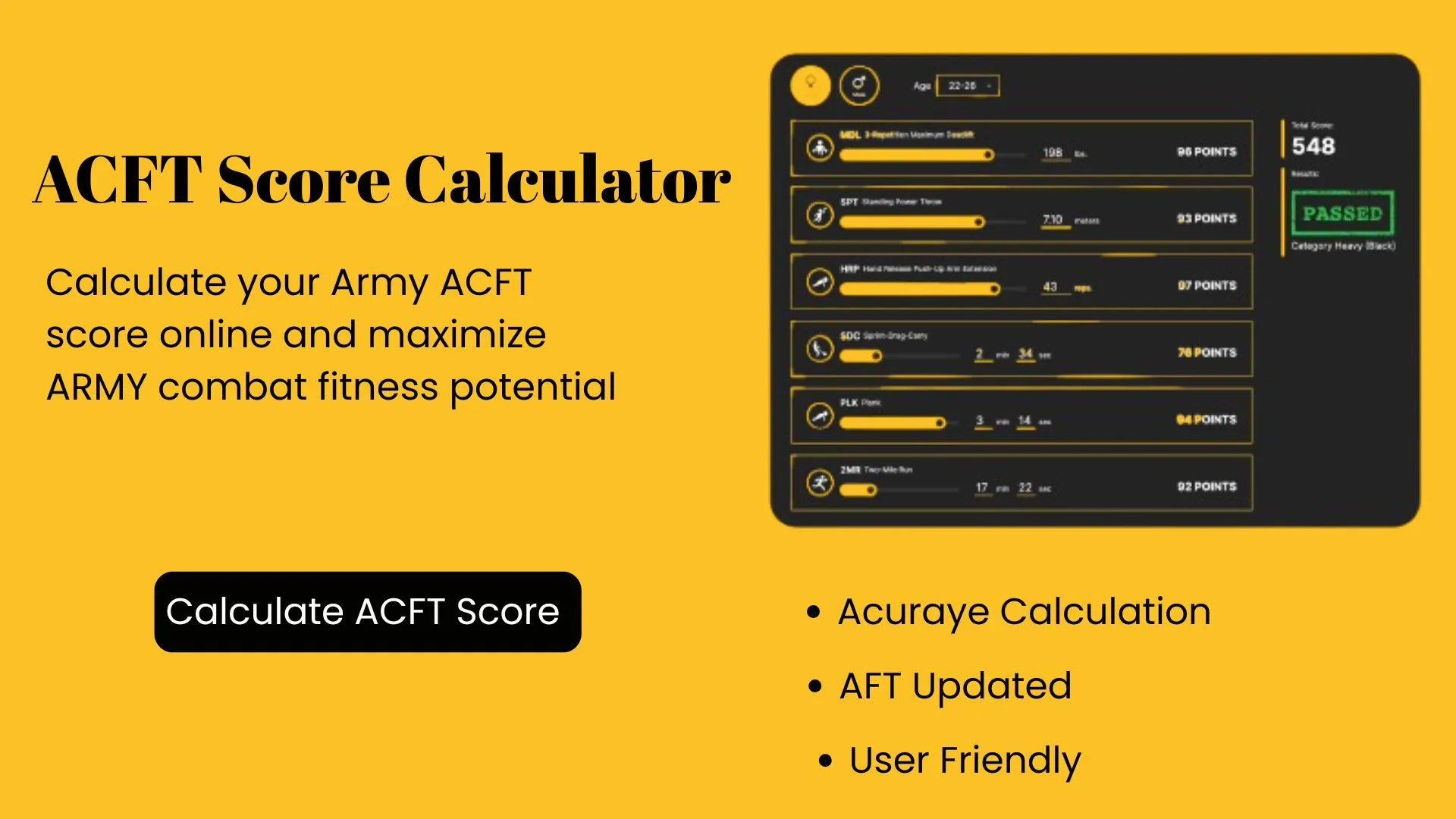
The ACFT consists of six events: the deadlift, standing power throw, hand-release push-up, sprint-drag-carry, leg tuck, and 2-mile run. The scoring system is based on a soldier's performance in each event, with a maximum score of 600 points. Each event is designed to assess various aspects of physical fitness, including strength, endurance, agility, and coordination. This multifaceted approach aims to create a more accurate representation of a soldier's physical capabilities and readiness for combat.
 For instance, the minimum passing scores have been adjusted to ensure that all soldiers meet a baseline level of fitness, while the maximum scores have been raised to encourage higher performance levels. Additionally, the scoring scales for each event have been recalibrated to reflect the evolving standards of physical fitness in the Army. This approach fosters a culture of excellence within the ranks, motivating soldiers to push their limits.
 This competitive spirit not only enhances individual fitness but also fosters teamwork and camaraderie among soldiers as they work together to achieve common goals. Moreover, the adjustments made to the scoring system have led to a more competitive atmosphere among soldiers. Many units have implemented training regimens specifically designed to prepare soldiers for the ACFT, resulting in improved performance metrics.
By incorporating a diverse range of events and adjusting scoring criteria based on age and gender, the Army is fostering a culture of holistic fitness that benefits both soldiers and the organization. As military operations continue to evolve, the ACFT will play a crucial role in ensuring that soldiers are prepared for the challenges they face in the field, ultimately enhancing the effectiveness of the United States Army. In conclusion, the 2025 ACFT Score Chart represents a pivotal evolution in military fitness standards, emphasizing the importance of comprehensive physical readiness.
The Army Combat Fitness Test (ACFT) has emerged as a pivotal component of the United States Army's approach to physical fitness and readiness. This article explores the implications of ACFT test scores on military readiness, personnel evaluation, and overall soldier development. Designed to enhance the physical capabilities of soldiers and ensure they are prepared for the rigors of combat, the acft calc has replaced the Army Physical Fitness Test (APFT) with a more comprehensive evaluation of fitness.
Moreover, the 2025 ACFT Score Chart aims to address the diverse physical abilities of soldiers across different demographics. This approach not only promotes inclusivity but also motivates soldiers to strive for personal improvement. By incorporating age and gender adjustments into the scoring system, the Army acknowledges the varying physical capacities among its personnel while maintaining rigorous standards.
Deadlift: This event measures lower body strength and endurance. Standing Power Throw: This assesses explosive power and upper body strength by having soldiers throw a weighted ball backward over their heads. Hand-Release Push-Ups: This event evaluates upper body endurance. Soldiers sprint 50 meters, drag a sled 50 meters, carry kettlebells 50 meters, and then sprint back to the start. Leg Tuck: This measures core strength and endurance. Soldiers perform push-ups with a hand-release component to ensure proper form and full range of motion. Sprint-Drag-Carry: This event tests agility, speed, and endurance. Soldiers must hang from a pull-up bar and raise their knees to their chest. Two-Mile Run: This classic endurance event assesses cardiovascular fitness as soldiers run two miles as quickly as possible. Soldiers lift a weighted barbell from the ground to a standing position.
The maximum score for each event varies, and the scoring tables provide clear benchmarks for performance. To pass the ACFT, soldiers must achieve a minimum score of 360 points, which requires scoring at least 60 points in each event. The scoring is designed to reflect the physical demands expected of soldiers in various military occupational specialties (MOS). The ACFT uses a scoring system that ranges from 0 to 600 points, with each event contributing to a soldier's total score.
The Army has been collecting data on how different MOS perform on the ACFT, allowing for a better understanding of the physical demands specific to each role. One significant factor influencing the future of ACFT standards is the ongoing analysis of test results and soldier performance. This data could lead to the development of tailored standards that reflect the unique requirements of each specialty. For example, combat arms MOS may require different physical capabilities compared to support MOS.
 This change acknowledges that physical performance can vary widely based on these factors, allowing for a more equitable assessment of soldiers' fitness levels. The 2026 score chart introduces several notable changes aimed at enhancing the test's fairness and effectiveness. One of the most significant adjustments is the scoring system, which has been refined to better account for age and gender differences.
For instance, the minimum passing scores have been adjusted to ensure that all soldiers meet a baseline level of fitness, while the maximum scores have been raised to encourage higher performance levels. Additionally, the scoring scales for each event have been recalibrated to reflect the evolving standards of physical fitness in the Army. This approach fosters a culture of excellence within the ranks, motivating soldiers to push their limits.This competitive spirit not only enhances individual fitness but also fosters teamwork and camaraderie among soldiers as they work together to achieve common goals. Moreover, the adjustments made to the scoring system have led to a more competitive atmosphere among soldiers. Many units have implemented training regimens specifically designed to prepare soldiers for the ACFT, resulting in improved performance metrics.By incorporating a diverse range of events and adjusting scoring criteria based on age and gender, the Army is fostering a culture of holistic fitness that benefits both soldiers and the organization. As military operations continue to evolve, the ACFT will play a crucial role in ensuring that soldiers are prepared for the challenges they face in the field, ultimately enhancing the effectiveness of the United States Army. In conclusion, the 2025 ACFT Score Chart represents a pivotal evolution in military fitness standards, emphasizing the importance of comprehensive physical readiness.
The Army Combat Fitness Test (ACFT) has emerged as a pivotal component of the United States Army's approach to physical fitness and readiness. This article explores the implications of ACFT test scores on military readiness, personnel evaluation, and overall soldier development. Designed to enhance the physical capabilities of soldiers and ensure they are prepared for the rigors of combat, the acft calc has replaced the Army Physical Fitness Test (APFT) with a more comprehensive evaluation of fitness.
Moreover, the 2025 ACFT Score Chart aims to address the diverse physical abilities of soldiers across different demographics. This approach not only promotes inclusivity but also motivates soldiers to strive for personal improvement. By incorporating age and gender adjustments into the scoring system, the Army acknowledges the varying physical capacities among its personnel while maintaining rigorous standards.
Deadlift: This event measures lower body strength and endurance. Standing Power Throw: This assesses explosive power and upper body strength by having soldiers throw a weighted ball backward over their heads. Hand-Release Push-Ups: This event evaluates upper body endurance. Soldiers sprint 50 meters, drag a sled 50 meters, carry kettlebells 50 meters, and then sprint back to the start. Leg Tuck: This measures core strength and endurance. Soldiers perform push-ups with a hand-release component to ensure proper form and full range of motion. Sprint-Drag-Carry: This event tests agility, speed, and endurance. Soldiers must hang from a pull-up bar and raise their knees to their chest. Two-Mile Run: This classic endurance event assesses cardiovascular fitness as soldiers run two miles as quickly as possible. Soldiers lift a weighted barbell from the ground to a standing position.
The maximum score for each event varies, and the scoring tables provide clear benchmarks for performance. To pass the ACFT, soldiers must achieve a minimum score of 360 points, which requires scoring at least 60 points in each event. The scoring is designed to reflect the physical demands expected of soldiers in various military occupational specialties (MOS). The ACFT uses a scoring system that ranges from 0 to 600 points, with each event contributing to a soldier's total score.
The Army has been collecting data on how different MOS perform on the ACFT, allowing for a better understanding of the physical demands specific to each role. One significant factor influencing the future of ACFT standards is the ongoing analysis of test results and soldier performance. This data could lead to the development of tailored standards that reflect the unique requirements of each specialty. For example, combat arms MOS may require different physical capabilities compared to support MOS.
This change acknowledges that physical performance can vary widely based on these factors, allowing for a more equitable assessment of soldiers' fitness levels. The 2026 score chart introduces several notable changes aimed at enhancing the test's fairness and effectiveness. One of the most significant adjustments is the scoring system, which has been refined to better account for age and gender differences.
댓글목록0
댓글 포인트 안내